Why U.S. companies choose offshore recruitment solutions
Offshore recruitment solutions cut U.S. hiring costs by up to 70% while keeping senior talent and U.S. business-hour coverage. See why companies switch.

Offshore recruitment solutions cut U.S. hiring costs by up to 70% while keeping senior talent and U.S. business-hour coverage. See why companies switch.

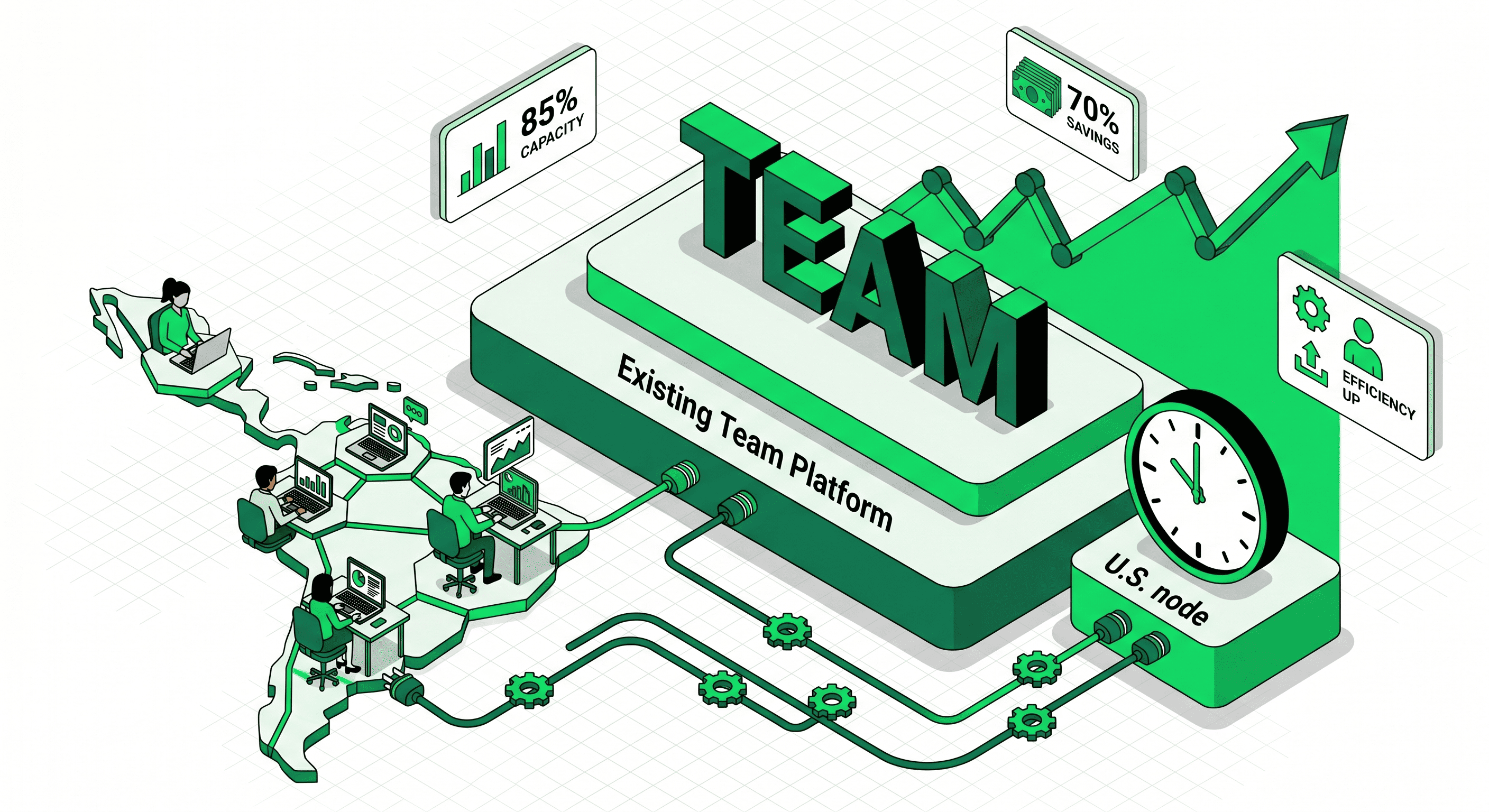
U.S. companies choose offshore recruitment solutions to cut hiring costs by up to 70% while keeping access to senior talent and full U.S. business-hour coverage. Instead of carrying the overhead of a domestic recruiting team, they bring in LATAM-based recruiters who source candidates across 15+ countries. The payoff is faster hiring at a fraction of the domestic cost, with no lag in day-to-day collaboration.
If you run hiring for a U.S. company, the math has stopped working. A single in-house recruiter costs six figures fully loaded, roles stay open for months, and every new requisition stretches a team already at capacity. Offshore recruitment solutions close that gap without forcing you to choose between speed, cost, and quality.
The shift comes down to four pressures hitting U.S. hiring teams at once: cost, speed, talent scarcity, and capacity. Offshore recruitment solutions address all four with a single model.
The savings are structural, not just hourly. A domestic recruiting hire carries salary, benefits, tooling, and ramp-up time. An offshore recruitment solution replaces that fixed overhead with a senior recruiter who is productive from day one.
Here is how the two models compare side by side:
You are not handing hiring to a black box. The recruiter maps each role in conversation with your team, then runs the search inside your existing process and tools. You stay in control of decisions while the sourcing, screening, and pipeline work happen offshore.
Because the recruiter works in your time zone, collaboration feels in-house. Feedback loops stay tight, interviews get scheduled without delay, and context compounds with every role instead of resetting each search.
Offshore recruitment solutions fit best when you are hiring at volume, filling roles faster than your internal team can manage, or watching domestic recruiting costs outpace the value they return. If any of those describe your quarter, the model is worth evaluating. Offshore staff augmentation is the closer fit if your gap is in delivery capacity rather than hiring.