Offshore recruitment solutions provider checklist
Choosing an offshore recruitment solutions provider? Compare recruiter seniority, time zones, and dedicated vs transactional models before you sign.

Choosing an offshore recruitment solutions provider? Compare recruiter seniority, time zones, and dedicated vs transactional models before you sign.

Choosing an offshore recruitment solutions provider comes down to five things: senior recruiters, U.S. time-zone overlap, a dedicated rather than transactional model, transparent pricing, and a verifiable track record. The right provider works as an extension of your team and learns your roles over time, instead of restarting from a brief on every search. Judge each candidate against those five criteria, starting with offshore recruiting solutions.
You have decided to hire offshore. Now your inbox is full of providers that all sound the same: senior talent, low cost, U.S. hours. On paper they are identical. The difference only shows up after you sign, when one provider knows your roles cold and another sends you a stranger for every search.
Look for proof on five fronts, not promises. These are the criteria that predict whether a provider performs after the contract starts:
A provider that can answer all five with specifics is worth a conversation. One that answers in adjectives is not.
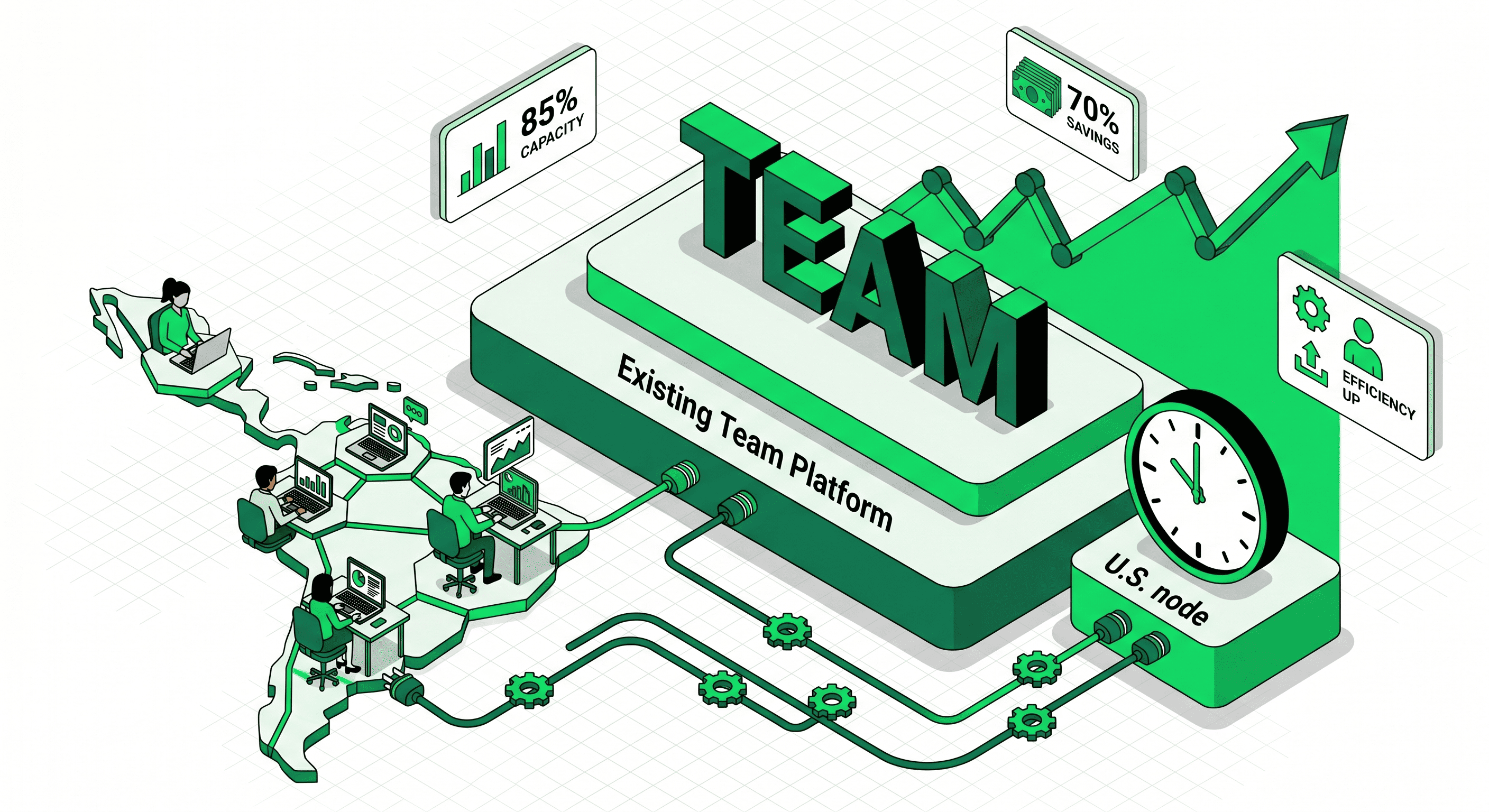
Most providers fall into one of two models, and the gap between them is the single biggest factor in your results. A transactional agency restarts from zero on every search. A dedicated offshore recruiter builds knowledge of your roles, your team, and your standards over time.
For a one-off, hard-to-fill role, a transactional agency can work. For ongoing hiring, a dedicated model compounds: every search is faster than the last because the recruiter already understands what "right" looks like for you.
The pitch will sound polished. These questions surface what the pitch leaves out:
If you need recruiters embedded in your team rather than running searches for you, that is a different model. Offshore staff augmentation covers the work side, while recruiting covers the hiring side.
The provider you choose is the difference between filling roles and chasing them. Hold every option to the same five criteria, and favor the one that treats your pipeline as its own. Ready to see what a dedicated model looks like? Explore how Offshore Genius sources offshore recruiting talent.